|
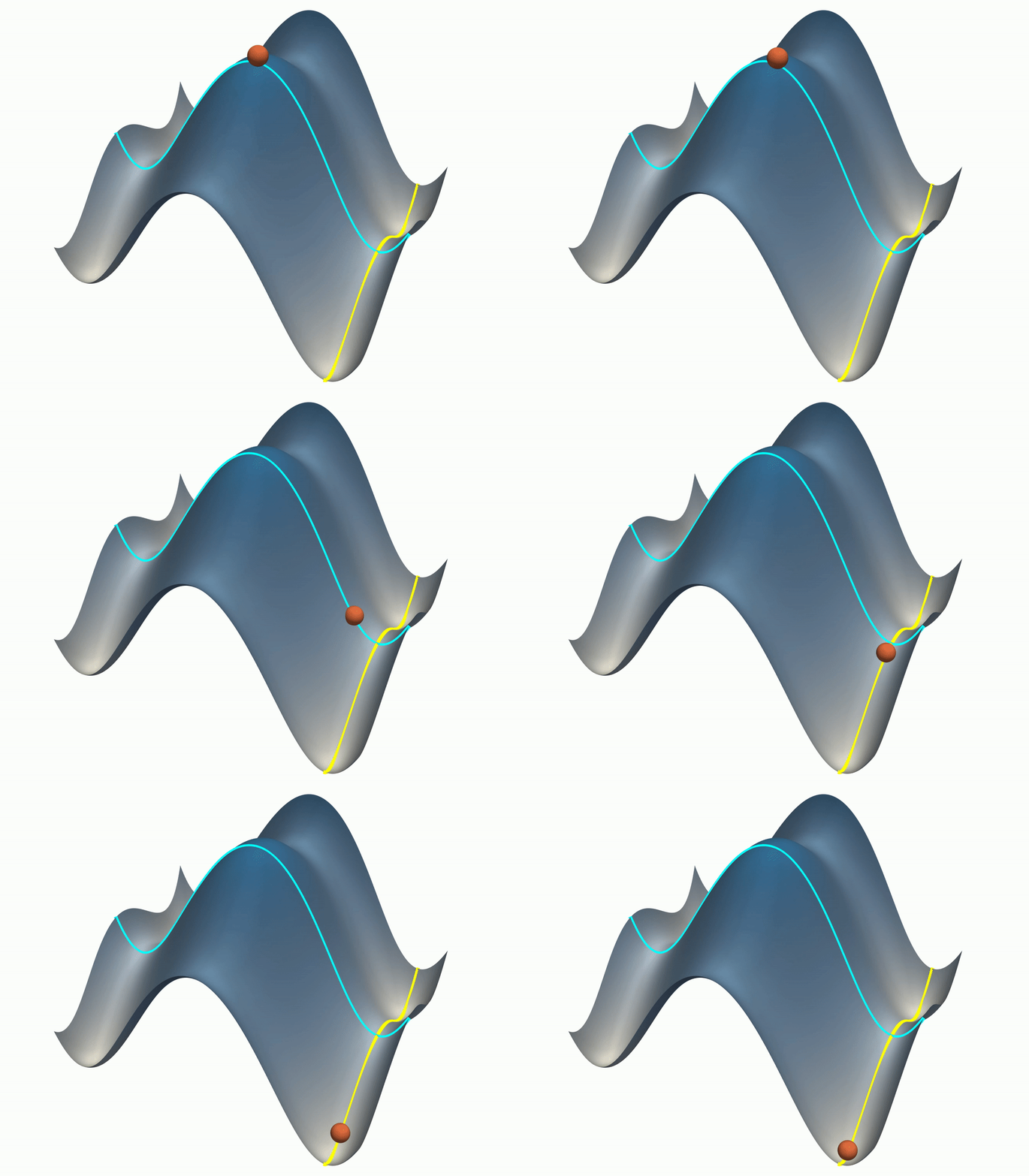
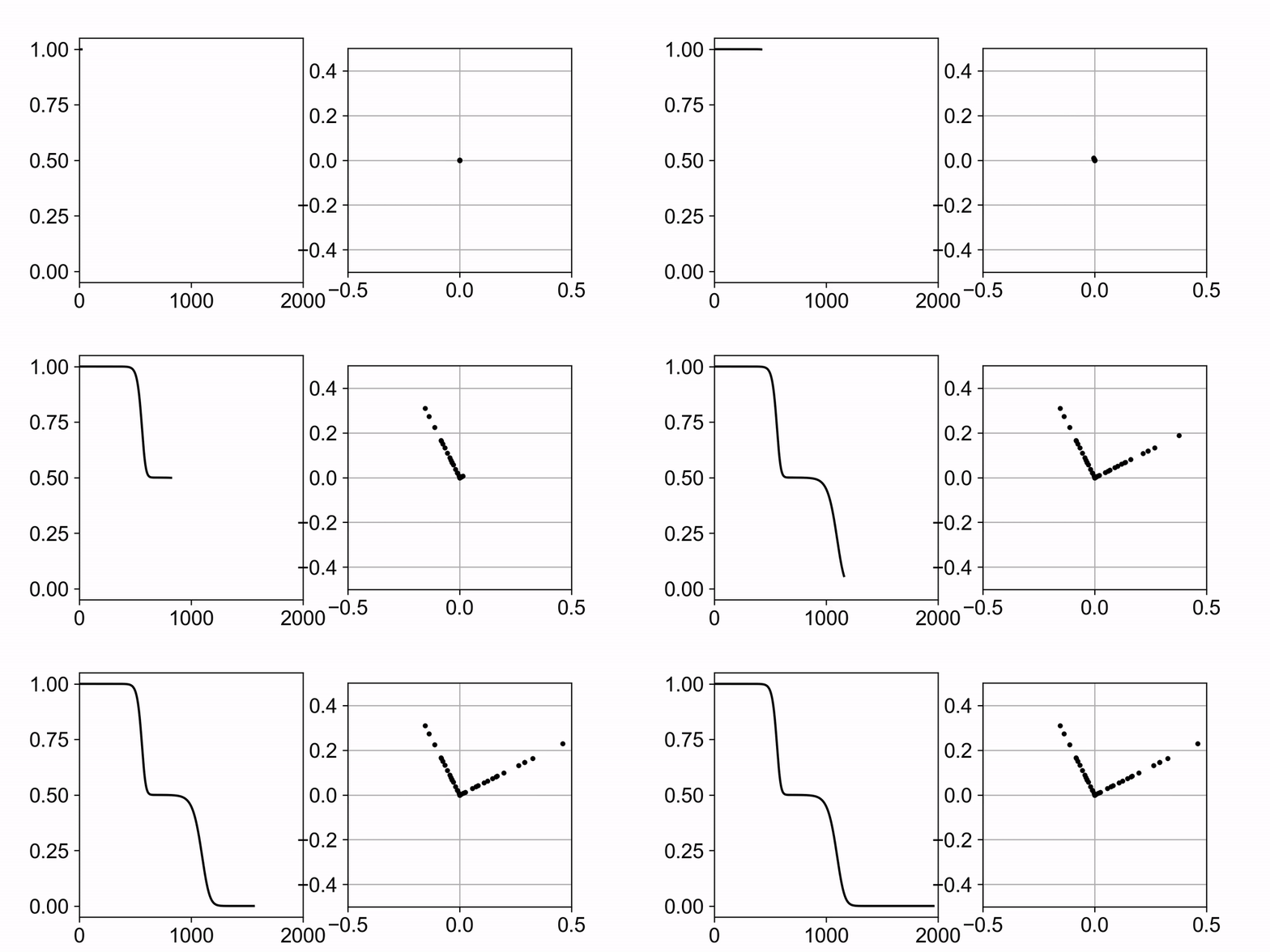
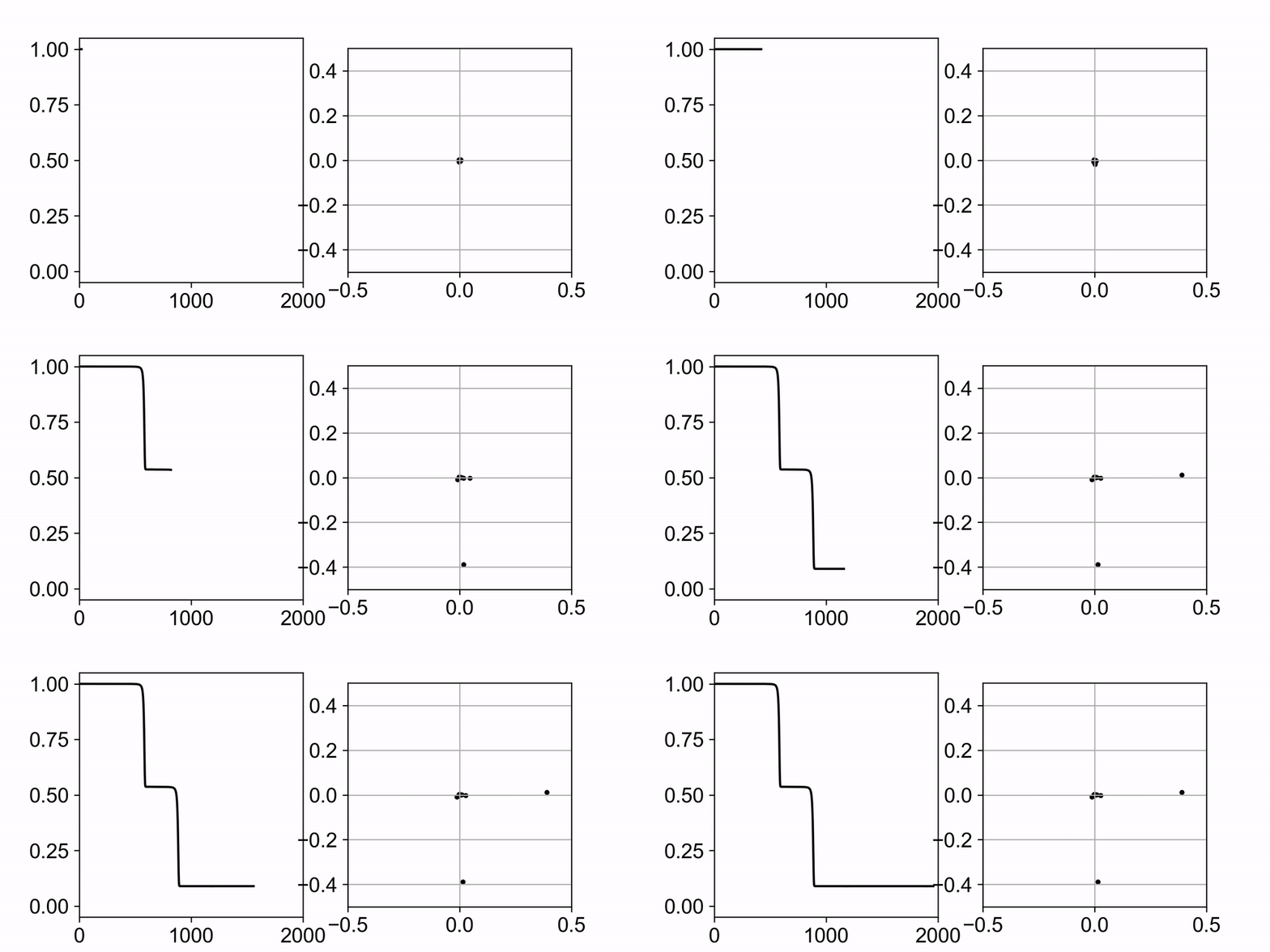
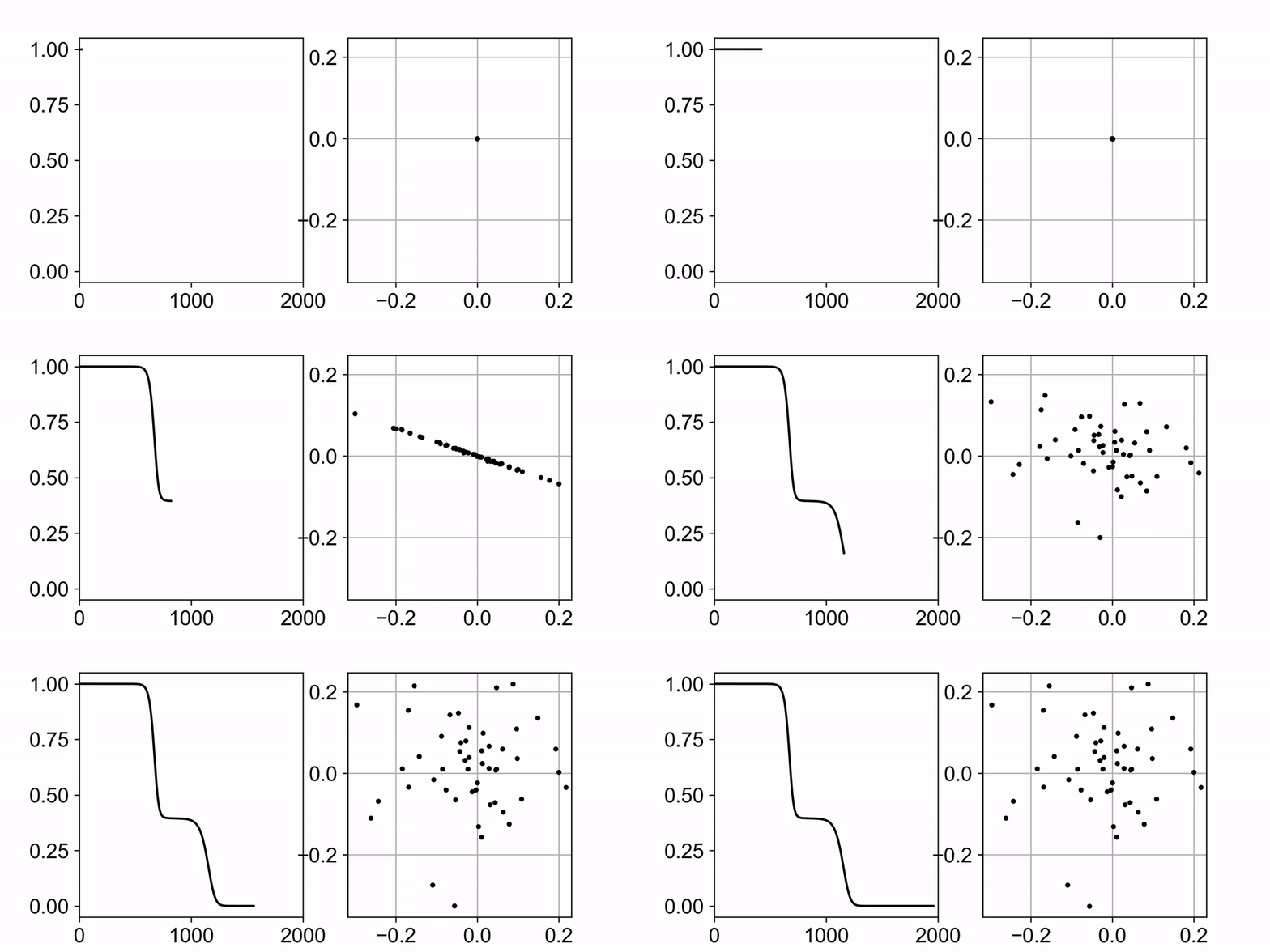
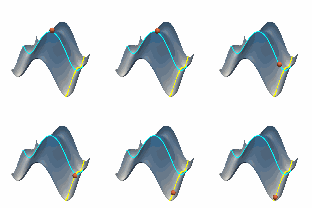
Neural networks trained with gradient descent often learn solutions of increasing complexity over time, a phenomenon known as simplicity bias. Despite being widely observed across architectures, existing theoretical treatments lack a unifying framework. We present a theoretical framework that explains a simplicity bias arising from saddle-to-saddle learning dynamics for a general class of neural networks, incorporating fully-connected, convolutional, and attention-based architectures. Here, simple means expressible with few hidden units, i.e., hidden neurons, convolutional kernels, or attention heads. Specifically, we show that linear networks learn solutions of increasing rank, ReLU networks learn solutions with an increasing number of kinks, convolutional networks learn solutions with an increasing number of convolutional kernels, and self-attention models learn solutions with an increasing number of attention heads. By analyzing fixed points, invariant manifolds, and dynamics of gradient descent learning, we show that saddle-to-saddle dynamics operates by iteratively evolving near an invariant manifold, approaching a saddle, and switching to another invariant manifold. Our analysis also disentangles data-induced and initialization-induced saddle-to-saddle dynamics. In particular, the former leads to low-rank weights while the latter to sparse weights. Equipped with the theory, we predict the effects of data distribution and weight initialization on the duration and number of plateaus in learning. Overall, our theory offers a framework for understanding when and why gradient descent progressively learns increasingly complex solutions.
|